Playstyle
The Best Pickleball Paddles for Power and Control
Every paddle trades one for the other somewhere. These five give up the least, and this page is honest about where each one pays for it.
The short answer
Quick picks
| # | Product | Best for | Score | Price |
|---|---|---|---|---|
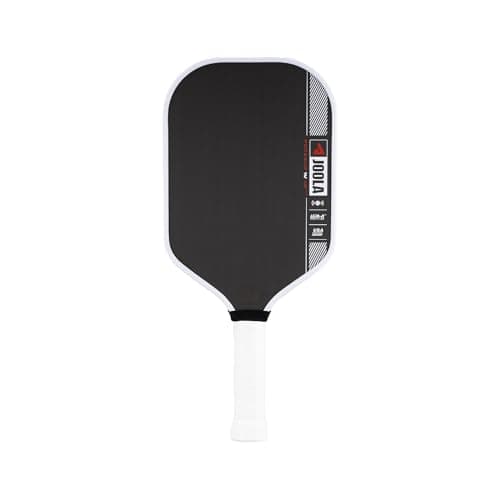
| 01 | JOOLA Perseus Pro IV 16mm A Propulsion Core for pace with a foam edge wall for forgiveness - the least compromised paddle here. | Best balance overall | 4.7/5 | $90.95Amazon |
| 02 | 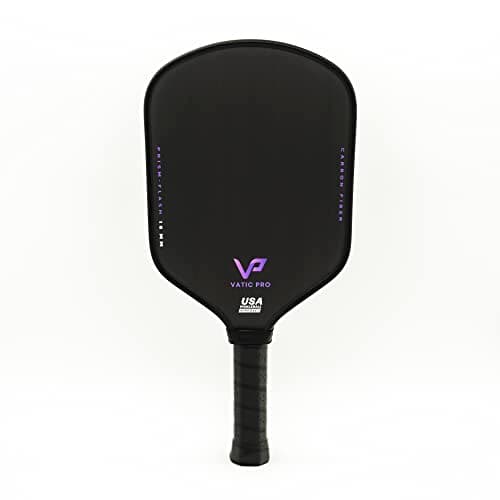 Vatic Pro Prism Flash 16mm Raw T700 carbon over a 16mm core with foam-injected walls, for about a hundred dollars. | Budget pick | 4.5/5 | $79.99Amazon |
| 03 | 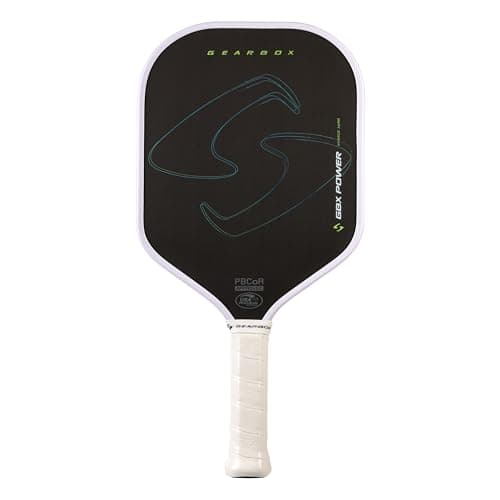 Gearbox GBX Power Hybrid A suspended Gen-3 core in a hybrid head - fewer peaks, far fewer bad misses. | Best for consistency | 4.4/5 | $149.99Amazon |
| 04 | 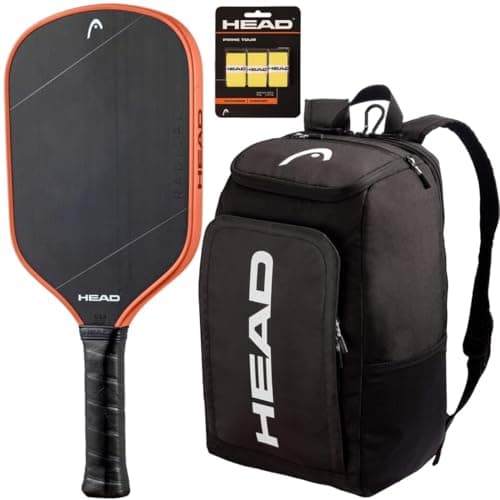 HEAD Radical Tour EX Raw A tournament paddle with a stated 8.1 oz weight and 4 1/8 in grip - you know what you are getting. | Best published specs | 4.4/5 | $124.95Amazon |
| 05 | 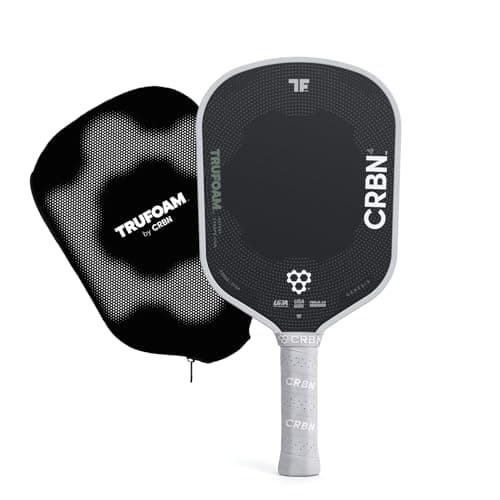 CRBN TruFoam Genesis A 100% foam core - the one construction that genuinely changes the trade rather than splitting it. | Best premium | 4.6/5 | $169.99Amazon |
#ad · Live prices from Amazon as of November 22, 2026; where we have no verified live price we show none. We may earn a commission — see our affiliate disclosure.
The verdict, up front: buy the JOOLA Perseus Pro IV 16mm. It is the paddle for the 3.5-plus player who drives the ball but has to reset and dink to stay in points — a Propulsion Core that returns pace with a foam edge wall that keeps off-center balls from flying, which is the specific combination the question is asking for. The budget pick is the Vatic Pro Prism Flash 16mmat roughly a hundred dollars, which has the same architecture — thick core, foam at the walls, raw carbon face — for a third less money.
Prices below are live from our price layerwith the capture date printed on each button. Specs are each manufacturer's published figures. No paddle here has been lab-tested by us, and this page will not pretend one does both jobs perfectly — the section below explains exactly what each one gives up.
Why power and control fight each other
It is not marketing. It is a single physical trade-off, and once you see it you can read any spec sheet. Power comes from energy returned to the ball; control comes from energy absorbed by the paddle.A firm, thin core returns more of the ball's energy, so the ball leaves faster — and that also means a small error at contact leaves faster. A thick, softer core absorbs more, so the ball drops where you aimed it — and a put-away needs you to supply the pace yourself.
There is a second trade on top of the first: swing weight. Mass further from your hand hits harder and is slower to move, which is why an elongated, head-heavy paddle drives well and loses hands battles. A paddle can be powerful in the sense of hitting hard and still feel uncontrollable because you cannot get it into position in time — our swing weight guide covers that in detail.
So "power and control" is really a request for a paddle that responds differently to a soft ball than to a hard one. Three design choices get close: a thick core with a firm face, foam placed where the frame flexes, or a core material that compresses progressively. The five paddles below are the best examples of each.
The three specs that decide the balance
Core thickness.16mm is the balanced band. At 14mm and below you are buying pop and giving up stability; at 17mm and above you are buying touch and giving up put-away pace. Four of the five paddles here are 16mm for exactly that reason — 14mm vs 16mm has the full comparison.
Where the foam is.Foam at the perimeter or edge wall (injected walls, foam edge wall, suspended core) stiffens the frame so the face twists less on mishits. That is pure gain: it adds forgiveness without softening the middle of the paddle, which is why it has become near-universal on good paddles since 2024. Foam as the entire core is a bigger change again — see best foam core paddles.
Shape. A hybrid or standard head puts more of the face near your hand, which lifts control and hand speed at the cost of reach and leverage. An elongated head does the reverse. If you are not sure which you are holding, our paddle shapes guide decodes the names.
At a glance
The five side by side, with the trade each one makes stated plainly. Specs are as published; every row price-checks on the spot.
| Paddle | Core | Shape | What it gives up | Best for | Price |
|---|---|---|---|---|---|
| JOOLA Perseus Pro IV 16mm | 16mm Honeycomb Propulsion with foam edge wall | Elongated | Hand speed - it is a big paddle | The best overall balance | Check price |
| Vatic Pro Prism Flash 16mm | 16mm with foam-injected walls | Elongated | Published specs and brand support | Spending the least | Check price |
| Gearbox GBX Power Hybrid | 16mm Gen-3 suspended honeycomb | Hybrid, 16.2 x 7.8 in | Top-end power ceiling | Consistency over peaks | Check price |
| HEAD Radical Tour EX Raw | Conventional - not thermoformed, no foam-loaded core | Standard | Perimeter stiffness | Known, published specs | Check price |
| CRBN TruFoam Genesis | 100% foam | Elongated | Price, and tunability | The best version of both | Check price |
#ad· Prices and availability change frequently — each button opens the live listing. We may earn a commission at no extra cost to you; see our affiliate disclosure.
Best balance overall: JOOLA Perseus Pro IV 16mm
Who it is for: the 3.5-plus player who drives the ball and still has to survive the kitchen.
JOOLA does something specific here that answers this question directly: it puts foam outside the frame — a foam edge wall around a 16mm Honeycomb Propulsion core — behind a Tech Flex Power carbon face. Propulsion is the power half: the core returns pace, so drives and put-aways come off firm. The foam edge wall is the control half: it keeps the face from twisting on the ball you catch late, which is where balance is actually won or lost in a real point. It is also the rare paddle carrying both UPA-A and USAP certification.
| Core | 16mm Honeycomb Propulsion with foam edge wall |
|---|---|
| Surface | Tech Flex Power carbon |
| Shape | Elongated |
| Thickness | 16mm |
| Handle | 5.5 in |
| Certification | UPA-A and USAP certified |
What I like: it is the most forgiving elongated paddle on this site, and the foam edge wall is the single best forgiveness feature available on a power paddle. The 5.5 in handle also suits a two-handed backhand — see paddles for a two-handed backhand. What gives me pause: it is a big elongated paddle, so hand speed at the net is its weak point, and it is the second most expensive thing here. There is a full JOOLA Perseus Pro IV review if you want the detail.
Budget pick: Vatic Pro Prism Flash 16mm
Who it is for:anyone who wants the architecture above without the flagship price — which is most people reading this.
The Prism Flash is built on the same three ideas as the Perseus: a 16mm core with foam-injected walls, a raw T700 carbon face for grip, and an elongated head for leverage. It arrives with a paddle cover and it is USA Pickleball approved. For balanced play at a hundred dollars there is nothing on this site I would take ahead of it, and it is our top pick on best paddles under $100 for the same reason.
| Surface | Raw T700 carbon fiber (textured) |
|---|---|
| Core | 16mm with foam-injected walls |
| Shape | Elongated |
| Extras | Includes paddle cover |
| Certification | USA Pickleball approved |
What I like: foam-injected walls at this price was unthinkable two years ago, and the construction per dollar is the best in pickleball. What gives me pause: Vatic publishes less than the big brands — no weight, no balance point, no grip circumference on the listing — and a direct-to-consumer brand means thinner warranty and resale support. Its own write-up is at Vatic Pro Prism Flash review.
Best for consistency: Gearbox GBX Power Hybrid
Who it is for: the player whose problem is not a lack of pace but a lack of repeatability.
Gearbox approaches balance from the other direction. Instead of maximising return and adding forgiveness, the 16mm Gen-3 suspended honeycomb core deliberately flattens the response across the face: you get fewer spectacular winners and far fewer balls that go somewhere you did not intend. In a hybrid 16.2 x 7.8 in head with a 5.5 in handle at a published 8.0 oz, that is the most predictable paddle on this page.
| Surface | Raw unidirectional carbon fiber |
|---|---|
| Core | 16mm Gen-3 suspended honeycomb |
| Shape | Hybrid, 16.2 x 7.8 in |
| Handle / weight | 5.5 in handle, 8.0 oz average |
| Best for | Players who want consistency over peaks |
What I like: a hybrid head is the shape that best serves a both-ends game, Gearbox publishes real dimensions and weights, and the brand comes from racquetball manufacturing rather than marketing. What gives me pause: the top-end power ceiling is genuinely lower than the Perseus' — if you win points by hitting through people, you will feel it. The rest of the line is on best Gearbox paddles.
Best published specs: HEAD Radical Tour EX Raw
Who it is for: the buyer who wants to know exactly what is arriving, and the tennis convert who already thinks in grip sizes.
HEAD is the one brand here that treats a paddle like a racquet: a stated 8.1 oz weight and a stated 4 1/8 in grip circumference, on a raw carbon tournament paddle. It is also honest construction — conventional, not thermoformed, with no foam-loaded core— which is worth saying out loud because it is the reason this paddle feels more neutral and less aggressive than the others here. Standard shape, so more of the face sits near your hand.
| Face | Raw carbon fiber |
|---|---|
| Weight | 8.1 oz |
| Grip circumference | 4 1/8" |
| Construction | Conventional - not thermoformed, no foam-loaded core |
| Category | Tournament paddle |
What I like: knowing the weight and grip before you buy removes the main reason paddles get returned, and a conventional build is a quieter, lower-vibration paddle than a thermoformed one. What gives me pause: no foam at the perimeter means less mishit forgiveness than anything else on this page, and HEAD's pricing moves a lot — check the live number. The full line is on best HEAD paddles.
Best premium: CRBN TruFoam Genesis
Who it is for: the 4.0-plus player who wants the construction that actually changes the trade-off rather than splitting it.
Everything above balances power and control by compromise. A 100% foam core does something different: it compresses progressively, so it behaves softly on a soft ball and firmly on a hard one. That is the closest the industry has come to refusing the trade altogether, and it is why the Genesis is the reference paddle for the category.
| Core | 100% foam |
|---|---|
| Surface | Carbon fiber |
| Shape | Elongated |
| Construction | Thermoformed unibody |
| Line | TruFoam Genesis - positioned as all-court |
What I like: it is the only paddle here where the answer to "which does it give up?" is genuinely "not much". What gives me pause: it is the most expensive paddle on the page by a distance, a foam core cannot be tuned with lead tape the way honeycomb can, and nobody has a two-season durability record for full-foam construction yet. Read the full CRBN TruFoam Genesis review before spending that.
The honest answer about doing both
A paddle cannot be the best power paddle and the best control paddle at once, and any page that tells you otherwise is selling. What a well-built 16mm paddle with foam at the walls does is make the compromise small enough to stop mattering at recreational and intermediate level — you lose a few miles per hour against a dedicated power build and a little touch against a dedicated control build, and you gain a paddle that never leaves you holding the wrong tool.
If you know which half of your game loses you points, buy for that half instead. Our best paddles for power and best paddles for control roundups are deliberately uncompromised, and a specialist paddle in the right hands beats a balanced one every time.
The bottom line
Most players should buy the JOOLA Perseus Pro IV 16mm: a propulsion core for pace and a foam edge wall for forgiveness, which is exactly what the question is asking for. On a budget, the Vatic Pro Prism Flash 16mm runs the same playbook for a third less. Want predictability over highlights? The Gearbox GBX Power Hybrid. Need to know the weight and grip before it arrives? The HEAD Radical Tour EX Raw. And if budget is not the constraint, the CRBN TruFoam Genesis is the one paddle here that changes the trade instead of splitting it. If you want one paddle for every phase of the point rather than for these two qualities specifically, that is best all-court paddles.
Frequently asked questions
Can a pickleball paddle have both power and control?
It can have a lot of both, and it cannot have the most of both. Power is energy returned to the ball and control is energy absorbed by the paddle, so the same core property drives them in opposite directions. What a good 16mm paddle with foam-injected walls or a foam edge wall does is shrink that compromise until it stops mattering below about 4.5 level — you give up a few miles per hour and a little touch and get a paddle that is never the wrong tool.
What core thickness is best for power and control?
16mm. Below 14mm the core is firm and thin, which returns more energy to the ball — more pop, less stability, and more punishment for off-center contact. At 17mm and up the core absorbs more, giving touch and taking away put-away pace. 16mm is where most balanced paddles sit, which is why four of the five picks on this page are 16mm.
Is the JOOLA Perseus Pro IV good for control?
Yes, better than its Propulsion Core name suggests, and the reason is the foam edge wall around the core. Foam outside the frame stops the face twisting on balls you catch late or wide, so the ball still goes roughly where you aimed. That is control in the sense that matters during a point. What it is not is a soft touch paddle — a drop still needs a deliberate soft hand from you.
Does a thicker paddle give more control?
Generally yes, up to a point. A thicker core compresses more at contact and absorbs more energy, which lengthens dwell time and makes the ball easier to place. The trade is put-away pace and, at 17mm and above, a slightly heavier and slower paddle. Thickness is also only half the story: where the foam sits and how heavy the head is matter just as much.
What is the cheapest paddle with both power and control?
The Vatic Pro Prism Flash 16mm, at around a hundred dollars. It has the same three ingredients as paddles costing twice as much — a 16mm core, foam-injected perimeter walls and a raw T700 carbon face — and it includes a cover. What you give up is published specification and brand support, not construction.
Sources
- JOOLA, Vatic Pro, Gearbox, HEAD and CRBN product pages for the five paddles above (core, surface, shape, dimensions, weight, grip and certification as published)
- USA Pickleball and UPA-A approved equipment lists for the certification claims
- Amazon listings for all five paddles above (availability and price verified through the site price layer)
Keep reading
Upgrading your paddle or gearing up to play?
See how we pick, then dig into the paddle roundups and buying guides — honest picks from someone who actually plays, with no inventory to move.