Paddle Roundup
The Best Heavy Pickleball Paddles in 2026
A heavy paddle buys you plow-through and stability, and charges you hand speed and shoulder fatigue. These are the five paddles we carry whose published weight genuinely reaches 8.3 oz - plus the cheaper way to get there.
The short answer
Quick picks
| # | Product | Best for | Score | Price |
|---|---|---|---|---|
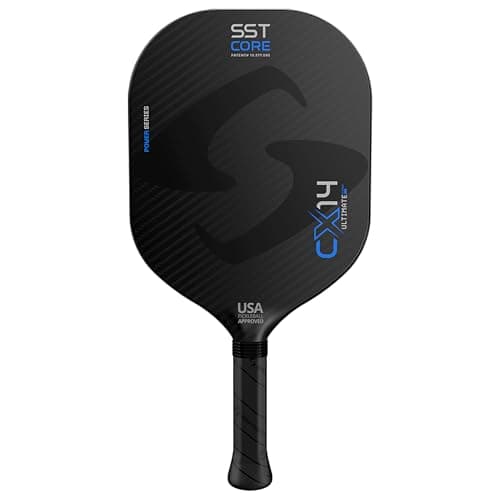
| 01 | Gearbox CX14H Ultimate Power 8.5 oz of solid carbon structure - the heaviest and most stable paddle we carry. | Best heavy paddle overall | 4.5/5 | $149.99Amazon |
| 02 | 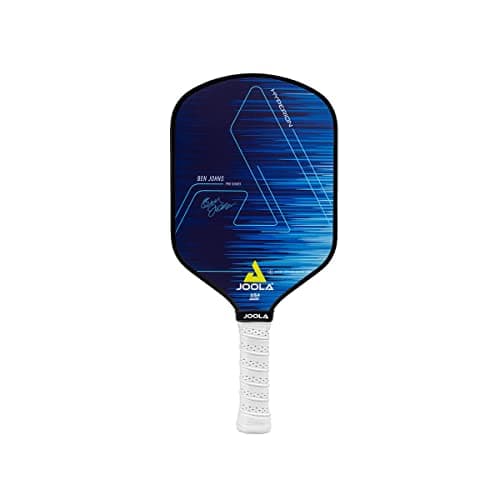 JOOLA Ben Johns Hyperion CAS 16 8.3 oz average on a 16.5 in elongated body, with one of the grippiest legal faces made. | Best heavy paddle for spin | 4.4/5 | $99.99Amazon |
| 03 | 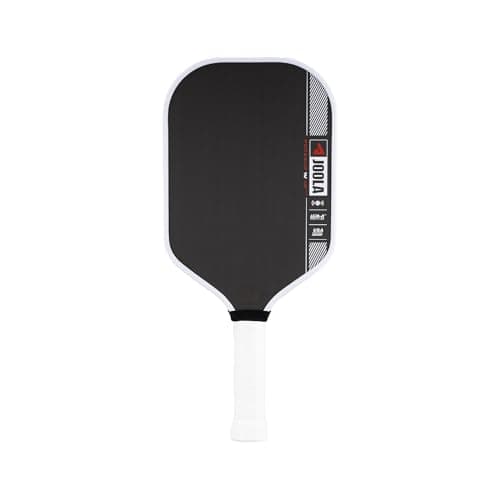 JOOLA Perseus Pro IV 16mm Foam outside the frame widens the sweet spot - the easiest heavy elongated paddle to hit. | Best heavy paddle for forgiveness | 4.5/5 | $149.95Amazon |
| 04 | 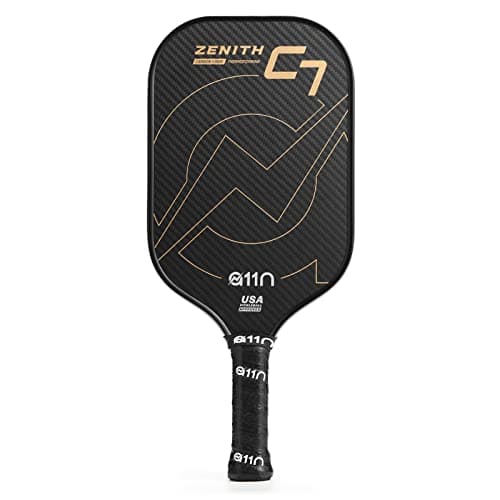 A11N Zenith C7 16mm A thermoformed carbon 16mm build that runs 8.0-8.4 oz, for about fifty dollars. | Best budget heavy paddle | 4.0/5 | $49.99Amazon |
| 05 | 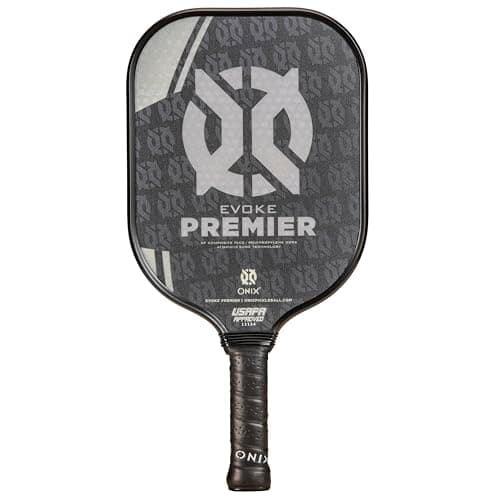 Onix Evoke Premier Sold in three weight builds reaching 8.5 oz, on the widest face here - if you pick the right one. | Cheapest route to a heavy build | 3.9/5 | $52.60Amazon |
#ad · Live prices from Amazon as of October 13, 2026; where we have no verified live price we show none. We may earn a commission — see our affiliate disclosure.
What a heavy paddle actually does
If you only read one line of this page: the Gearbox CX14H Ultimate Power is the heavy paddle most players asking this question should buy, because at a published 8.5 oz it is the only paddle we carry that is heavy and built as one rigid structure, so the mass actually translates into stability rather than wobble. Everything below explains why, and who should buy something lighter instead.
Pickleball paddles are sold across a narrow band. The market runs from roughly 7.3 oz to roughly 8.5 oz, and the great majority of paddles land between 7.8 and 8.2 oz. That is a range of about an ounce from one end of the sport to the other, which is why weight arguments get heated over differences you could fix with a strip of tape. Within that band, though, extra mass does three specific things.
Plow-through.A heavier paddle loses less speed when it meets the ball, so a drive that would have slowed on contact keeps going. Tennis and squash players recognize this instantly — it is why a heavy racquet feels authoritative. It is the single clearest benefit of weight, and it shows up most on drives, serves and overheads.
Stability on off-center contact. Mass resists twisting. Hit a ball toward the edge of a light paddle and the face rotates in your hand, which sends the ball somewhere you did not choose. The same miss on a heavier paddle twists less and leaves the face closer to where you aimed. This is the benefit players feel without being able to name it.
Depth on blocks and resets. A heavier face is harder for an incoming drive to push around, so a block you barely move the paddle for still carries enough to land past the kitchen line rather than dying at your feet.
The bill comes due in two places. The first is hand speed: in a fast exchange at the kitchen line, every extra gram is time you do not have. The second is your arm. More mass through more swings is more load on the shoulder and elbow, and a heavy paddle is the wrong direction entirely if your arm already hurts.
Who should not buy a heavy paddle
Three groups are better served by something lighter, and it is worth saying so before you spend.
Anyone managing arm pain.Heavier paddles mean more load per swing and more shock arriving at the elbow. If you have tennis elbow, wrist pain or arthritic hands, this is the wrong page — start with best paddles for tennis elbow or best paddles for arthritis instead.
Players whose points are decided at the kitchen line. Recreational doubles is largely dinks, blocks and speed-ups, and in a hands battle the quicker paddle wins more than the heavier one. If that is your game, read best paddles for doubles and best lightweight paddles, which is the direct counterpart to this page.
Anyone who plays three hours at a stretch. Pickleball asks for far more shots per hour than tennis does. A paddle that feels pleasantly substantial for twenty minutes can leave your shoulder done by the third game, and fatigue costs you more points than plow-through wins.
Everyone else — singles players, drive-first doubles players, tennis and racquetball converts, bigger-framed players, and anyone whose blocks keep landing short — is a reasonable candidate for the paddles below.
How we picked
One hard inclusion rule: the manufacturer's own published weight has to reach about 8.3 oz, either as the stated figure, as the top of a stated tolerance range, or as a specific build the maker sells. Nothing here was rounded up, and nothing was included because it “feels” heavy. Where a paddle only reaches 8.3 oz at the top of its range, the entry says so in plain terms rather than quoting the flattering number.
Every paddle also had to be in stock on Amazon with a live pricewhen this page was written; the buttons below carry the current number and the date it was captured. And the five had to cover the real decisions a heavy-paddle buyer faces — solid core or honeycomb, elongated or wide, premium or under fifty dollars — rather than five variations on the same power paddle.
Weights and specs come from manufacturer and retailer listings. We have not put these paddles on a scale ourselves, and published weights carry real tolerance: a stated 8.3 oz average can arrive at 8.1 oz or 8.5 oz. Our full method is on how we review.
At a glance
| Paddle | Published weight | Core | Shape | Best for |
|---|---|---|---|---|
| Gearbox CX14H Ultimate Power | 8.5 oz | 14mm solid SSTcore with Power Band | 15.625 x 8 in (Hyper) | Overall, stability |
| JOOLA Ben Johns Hyperion CAS 16 | 8.3 oz avg (8.1-8.5 oz) | 16mm Response Polymer | Elongated, 16.5 x 7.5 in | Spin and plow-through |
| JOOLA Perseus Pro IV 16mm | 8.1 oz avg (7.9-8.3 oz) | 16mm Honeycomb Propulsion, foam edge wall | Elongated, 16.5 x 7.5 in | Forgiveness |
| A11N Zenith C7 16mm | About 8.0-8.4 oz | 16mm polymer honeycomb, foam-injected walls | Elongated | Budget |
| Onix Evoke Premier | 7.5-8.5 oz depending on build | 14mm polypropylene | Impact, 16 x 8 in | Cheapest heavy build |
Best heavy paddle overall: Gearbox CX14H Ultimate Power
Who it is for: the player who wants mass to buy stability and feedback, and who does not want the paddle to flex or wobble on a hard ball.
This is the heaviest paddle we carry, and the only one where the weight comes from the construction rather than from added mass. Gearbox's patented SSTcore replaces honeycomb with carbon-fiber rib structures running through a 14mm body, and Power Band suspends those ribs away from the perimeter so the 3K woven carbonface can still flex. The head is Gearbox's Hyper shape — 15.625 by 8 inches, so unusually wide and slightly short — on a long 5.625-inch handle. At 8.5 oz it plays heavier still, because the mass is spread through a rigid structure rather than concentrated in a soft core.
| Surface | 3K woven carbon fiber (Toray T-700) |
|---|---|
| Core | 14mm patented SSTcore with Power Band |
| Dimensions | 15.625 x 8 in (Hyper shape) |
| Handle | 5.625 in; this listing is the 3 5/8 in (small) grip |
| Weight | 8.5 oz |
| Certification | USA Pickleball approved |
What I like: a wide face on a rigid single-piece structure resists twisting on off-center contact better than almost anything in the sport, which is exactly the thing weight is supposed to buy you. The feedback is precise enough that you know where on the face you hit the ball. And nothing can delaminate, because nothing is glued — a real advantage over the thermoformed paddles covered in our delamination explainer. There is more on the range in best Gearbox paddles.
What gives me pause: it is firm, it is heavy, and a rigid carbon core sends more vibration into your hand than a 16mm honeycomb paddle does — 8.5 oz of stiff structure is the most demanding combination here on an arm. Spin is good rather than great, because woven 3K carbon does not bite like a raw high-grit face. Gearbox retail stock is also thin and the listing we verified is the 3 5/8-inch grip, which is small for the big-swinging player this paddle suits; most buyers will want to build it up, which our grip size guide covers.
Best heavy paddle for spin: JOOLA Ben Johns Hyperion CAS 16
Who it is for: the tennis convert, and anyone who wants plow-through and a high spin ceiling in the same paddle.
The Hyperion is the paddle most people picture when they think “heavy pickleball paddle”, and the published 8.3 oz average is genuinely at the top of the market. It pairs that with the Carbon Abrasion Surface, one of the grippiest legal faces in the sport, and a 5.5-inch handle long enough for a real two-handed backhand. Drives dip inside the baseline instead of sailing, and slice returns skid low.
| Handle length | 5.5 in (fits a two-handed backhand) |
|---|---|
| Dimensions | 16.5 in long x 7.5 in wide, elongated |
| Weight | 8.3 oz average (8.1-8.5 oz range) |
| Face | Hybrid-ply with Carbon Abrasion Surface (high grit) |
| Core | 16mm Response Polymer |
| Grip | 4 1/4 in medium, Sure-Grip |
What I like: it is the best-balanced version of this trade-off on the page. The extra ounce makes drives feel authoritative, the handle length is a real spec rather than a marketing number, and the face means you do not pay for weight with a loss of spin. Full details are in the JOOLA Hyperion review, and it leads our best paddles for spin roundup.
What gives me pause: this is a superseded generation. JOOLA has moved on to the Pro IV platform below, and that shows up as stock and price that move around week to week on the same listing. The elongated outline also shrinks the sweet spot, so mishits punish you more than a widebody would, and 8.3 oz on a 16.5-inch frame is slow in a hands battle at the kitchen. If your elbow is sensitive, do not buy it.
Most forgiving heavy paddle: JOOLA Perseus Pro IV 16mm
Who it is for: the player who wants a substantial elongated paddle but does not want to be punished for every ball off the middle.
The Perseus Pro IV sits at the lighter end of this page — 8.1 oz average, reaching 8.3 oz at the top of its stated range — and it earns its place because of what JOOLA does with the mass. Tech Flex construction puts foam outside the frame and under the edge guard around a 16mm Propulsion core, which widens the usable sweet spot. The practical effect on a heavy elongated paddle is forgiveness: the mishits that die on a standard elongated frame still come off this one with pace.
| Handle length | 5.5 in (fits a two-handed backhand) |
|---|---|
| Dimensions | 16.5 in long x 7.5 in wide, elongated |
| Weight | 8.1 oz average (7.9-8.3 oz range) |
| Face | Textured carbon fiber |
| Core | 16mm Honeycomb Propulsion, Hyper-Foam edge wall |
| Certification | USAP and UPA-A certified |
What I like: the biggest usable sweet spot of any elongated paddle we carry, a power ceiling that rewards a real swing, and a 16mm core that resets far better than the Gearbox does. It is also the top pick on best paddles under $200 and a pick on best 16mm paddles.
What gives me pause: it is the pick here that only justqualifies. If you want the heaviest paddle you can buy, this is not it — an individual unit may well arrive at 7.9 oz, below everything else on this page. It also sits at the top of this page on price, and the gap over the Hyperion is not proportional to the gap in price. And it is a lot of paddle for someone still learning to shorten their backswing; the power that helps a controlled swing turns overhitting into a habit.
Best budget heavy paddle: A11N Zenith C7 16mm
Who it is for: the player who wants to find out whether a heavier paddle suits them without spending real money on the experiment.
The Zenith C7 runs about 8.0 to 8.4 oz, which makes it the cheapest honest route onto this page by a wide margin. The specification is genuinely modern: a textured T700 carbon fiber face, a 16mm polymer honeycomb core with foam-injected walls, thermoformed construction, an elongated outline, and USA Pickleball approval. Five years ago that spec sheet would have cost four figures of marketing hype.
| Surface | T700 carbon fiber (textured, thermoformed) |
|---|---|
| Core | 16mm polymer honeycomb, foam-injected walls |
| Shape | Elongated |
| Weight | About 8.0-8.4 oz |
| Certification | USA Pickleball approved |
| Best for | Players testing whether weight suits them |
What I like: it is the clearest value here and a legitimate way to answer the weight question for the price of two lessons. It is also the overall pick on our best paddles under $75 roundup and a pick on best paddles under $50.
What gives me pause: the published range is wide enough that the unit you receive might land at 8.0 oz, which is not a heavy paddle at all — this is the pick most likely to disappoint a buyer shopping specifically on weight. A11N is a budget brand without the quality-control record or warranty support of Selkirk or JOOLA, so unit-to-unit consistency is less certain and resale value is effectively nil. The same delamination caveat that applies to every thermoformed foam-wall build applies here, with less of a track record behind it.
Cheapest route to a heavy build: Onix Evoke Premier
Who it is for: the player who wants weight plus the widest, softest face here, and who is willing to pay attention to which variant they add to the cart.
The Evoke Premier is Onix's long-running competition paddle, and the reason it belongs on this page is that Onix sells it in three weight builds spanning 7.5 to 8.5 oz. Pick the heavy one and you get the most mass available under sixty dollars, on a DF Composite fiberglass face over a 14mm polypropylene core in a 16 by 8-inch shape Onix calls Impact. Eight inches of width is the biggest target in this roundup, and fiberglass lands drops more softly than any carbon face here.
| Face | DF Composite (fiberglass) |
|---|---|
| Core | Polypropylene, 14mm |
| Shape | Impact, 16 in long x 8 in wide |
| Handle | 5 in; grip 4 in (light build) or 4.125 in (standard/heavy) |
| Weight | 7.5-8.5 oz depending on build |
| USA Pickleball | Approved |
What I like: the widest sweet spot and the gentlest touch response on this page, for the least money. For a recreational doubles player who wants plow-through without the punishment of an elongated frame, this is the sensible answer. It is also a pick on best Onix paddles and best 14mm paddles.
What gives me pause: the weight you get depends entirely on the variant you select, and the Amazon listing title does not state it — buy carelessly and you may receive a 7.5 oz paddle, the lightest thing mentioned anywhere on this page. Fiberglass also does not spin like raw carbon, full stop; if topspin matters, buy the Hyperion. And the 5-inch handle is too short for a genuine two-handed backhand.
The cheaper answer: add tape to the paddle you own
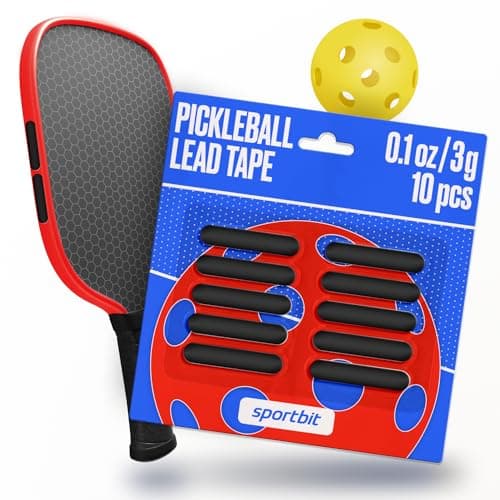
This is the part of the page that argues against the page. If you already own a paddle you get on with, buying a heavier one is the expensive way to solve this. Lead or tungsten tape costs a few dollars, weighs three grams a bar, and lets you add mass exactly where you want it — at three and nine o'clock for stability, at the top for plow-through, in the handle to raise static weight while keeping the paddle quick.
A paddle at 7.9 oz plus four grams of tape is an 8.05 oz paddle, and you chose where the grams went. No new paddle gives you that. It is also reversible, which a purchase is not, and it answers the underlying question — do I actually want more mass? — for about five dollars.
Add it in small increments, play with it, and keep going only if the change helped. Our step-by-step guide to adding lead tape covers placement, quantity and the legality rules, and swing weight explained covers why placement matters more than quantity.
Three traps when shopping by weight
The listing often sells a lighter build than the spec sheet.Gearbox publishes the GX6 in both a 7.8 oz and an 8.5 oz build, but the GX6 listing we carry is explicitly the 7.8 oz version — so it is a fine paddle and a bad way to buy weight. Several makers do this. Read the variant, not the brochure.
Tolerance is wider than the differences you are shopping on.A paddle published at “8.3 oz average, 8.1 to 8.5 oz range” can arrive two tenths either side of the number that sold you on it. That tolerance is larger than the gap between most of the paddles on this page. If a specific weight genuinely matters to you, buy near the middle and tune with tape.
Heavy does not mean powerful.Power comes from face stiffness, core construction and your own swing speed at least as much as from mass — our best paddles for power roundup includes paddles lighter than everything here. A heavy paddle you swing slowly produces less pace than a light paddle you swing fast, and whether paddles make a difference at all is worth reading before you spend on either.
The bottom line
Buy the Gearbox CX14H Ultimate Power if you want one answer: the heaviest paddle here, with the mass built into a rigid structure so it buys stability rather than just effort. If you came from tennis and want spin with your plow-through, the JOOLA Hyperion CAS 16 is the better face, with the honest caveat that it is a superseded generation. If you want a substantial elongated paddle that forgives a sloppy ball, the Perseus Pro IV is the most complete paddle on the page, even though it only just clears the weight bar.
On a budget, the A11N Zenith C7 answers the weight question for about fifty dollars, and the Onix Evoke Premier gets you a heavy build on the widest face here if you pick the right variant. And if you already own a paddle you like, spend five dollars on tapebefore you spend a hundred and fifty on this list — that is the right answer for more players than this page is. If, reading all of it, quick hands sound more like your game than plow-through does, go buy a lightweight paddle instead.
Frequently asked questions
What is the best heavy pickleball paddle?
The Gearbox CX14H Ultimate Power, for most players. At a published 8.5 oz it is the heaviest paddle we carry, and the mass comes from a single-piece solid carbon core rather than from added material, so it resists twisting on off-center contact better than anything else here. If you want spin with the weight, the JOOLA Ben Johns Hyperion CAS 16 at 8.3 oz average has a far grippier face.
What counts as a heavy pickleball paddle?
There is no official standard. In practice the market runs from about 7.3 oz to about 8.5 oz, with most paddles between 7.8 and 8.2 oz, so anything with a published weight at or above roughly 8.3 oz sits at the heavy end of what is sold. Every paddle on this page reaches 8.3 oz either as its stated figure, at the top of its stated tolerance range, or as a specific build the maker offers.
Is a heavier pickleball paddle better for power?
It helps, but it is not the main lever. A heavier paddle loses less speed on contact, which gives you plow-through on drives and serves. But face stiffness, core construction and your own swing speed matter at least as much, and a heavy paddle you swing slowly produces less pace than a light paddle you swing fast. Several paddles on our best paddles for power roundup are lighter than everything on this page.
Do heavy pickleball paddles cause tennis elbow?
They increase the load. More mass means more force through the elbow and shoulder on every swing, and pickleball asks for a lot of swings per hour. Grip circumference, how hard you squeeze, core thickness and technique all matter too, but if your arm already hurts, a heavier paddle is the wrong direction - start with our best paddles for tennis elbow instead.
Can I make my pickleball paddle heavier instead of buying a new one?
Yes, and for most players that is the better move. Lead or tungsten tape costs a few dollars, adds about three grams per bar, and lets you choose where the mass goes - at three and nine o'clock for stability, at the top for plow-through, or in the handle to raise static weight while keeping the paddle quick through a hands battle. It is reversible, unlike a purchase. Our lead tape guide covers placement and the legality rules.
How much does paddle weight vary from the published number?
Enough to matter. Makers that publish a tolerance typically quote plus or minus 0.2 oz, so a paddle sold as 8.3 oz average can arrive at 8.1 or 8.5 oz - a spread wider than the gap between most paddles in this roundup. Paddles sold in multiple weight builds vary far more than that, and the Amazon listing title often does not state which build you are buying.
Sources
Keep reading
Upgrading your paddle or gearing up to play?
See how we pick, then dig into the paddle roundups and buying guides — honest picks from someone who actually plays, with no inventory to move.